
(an) archive
By calling this (an) archive and not (the) archive, we are acknowledging that this is only part of the story.
This is not the only archive of old-time music. Ethnomusicologists and enthusiasts alike have been recording sessions, performances, and musicians talking about this style of music for more than a century. Old-time music, a genre of North American folk music that fuses Scottish, Irish, English immigrant, Cajun, and African slave tunes, has its roots as far back as the 16th century. Tunes are passed down by ear and played by string bands made up of fiddles, banjos, mandolins, guitars, and other instruments. Musicians nowadays typically gather for sessions in someone’s home, barn, or a local bar, and these jams are often welcoming to regulars and newcomers alike.
The genre has changed with time. Tunes are remembered differently. Some stop being played. Some were never recorded. As an archive, we recognize the impossibility of creating a complete collection of old-time music, and we devote ourselves to preserving what we can.
Old-time music is a contradiction. It is enduring ephemerality. Tunes have been played thousands of times, but each version is slightly different because of the room, the people, their musicality, and a myriad of other factors. Even if the same group plays the same tunes in the same room, it will not produce the same sound. Often, these unique iterations live only in the air of the jam session, on the callused fingers of the musicians present, and in the memories and retellings of participants. There is something fleeting about it, and recording is inherently disruptive to this ecosystem. It preserves one iteration, something that was not meant to be representative. This knowledge only leaves a physical trace if someone is there to listen and record.
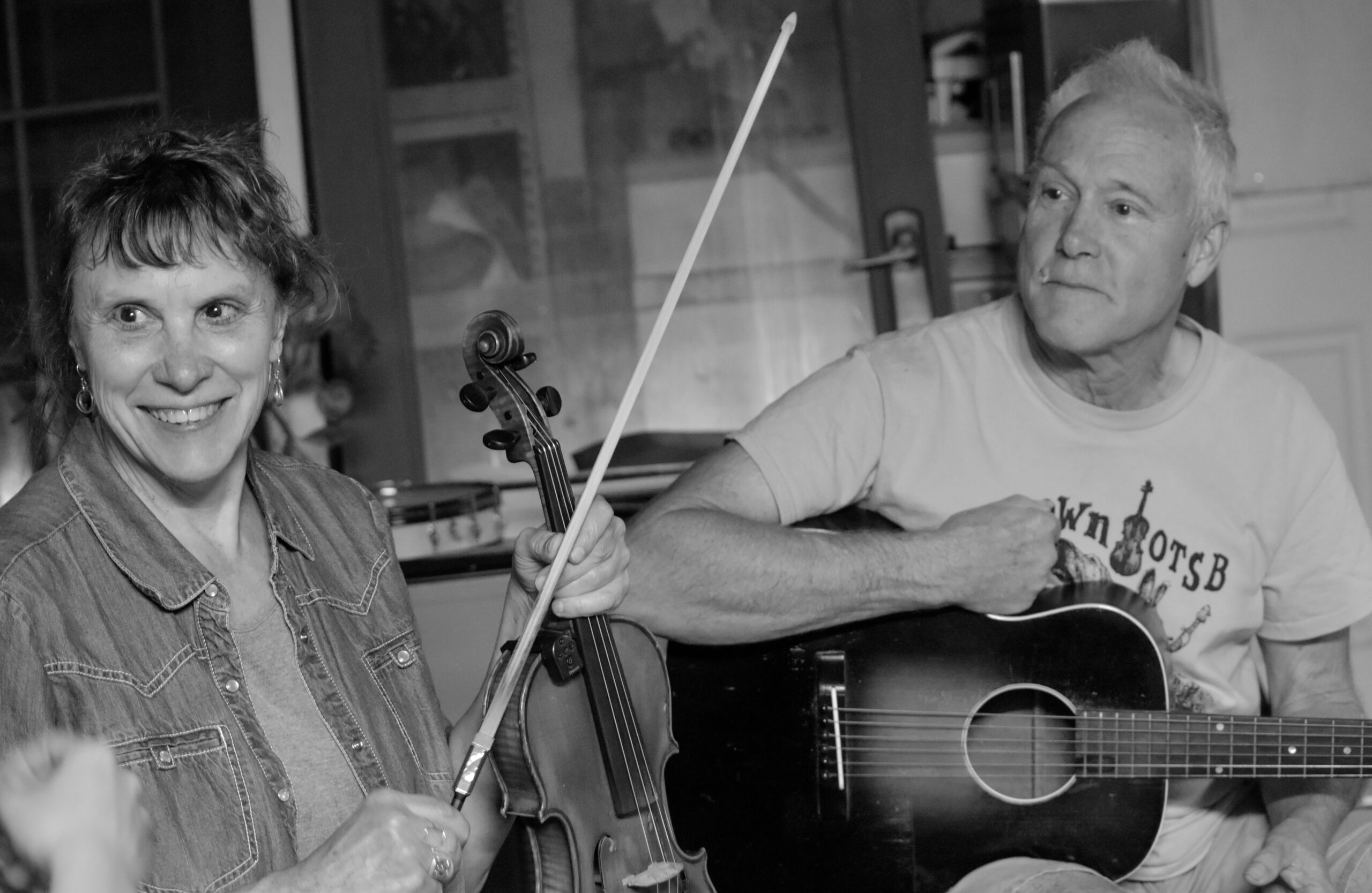
By calling ourselves (an) archive, we are recognizing that the collector generates and shapes the content. They determine the geographies, people, and stories that are preserved. For this archive, Dana Richie, who was an undergraduate at Brown University at (an) archive’s inception, documented the local old-time scene in Rhode Island. She first met Sandol Astrausky and Rory MacLeod on Brown’s campus while writing an article for the university’s alumni magazine about the Old-time String Band course that they teach. For a year, she followed her curiosity, and the couple guided her to other parts of the old-time community. Richie did not have a car while collecting the content for this archive, so her geography was limited to the greater Providence area and Rhode Island. With more resources and time, she hopes to expand this archive to other communities.